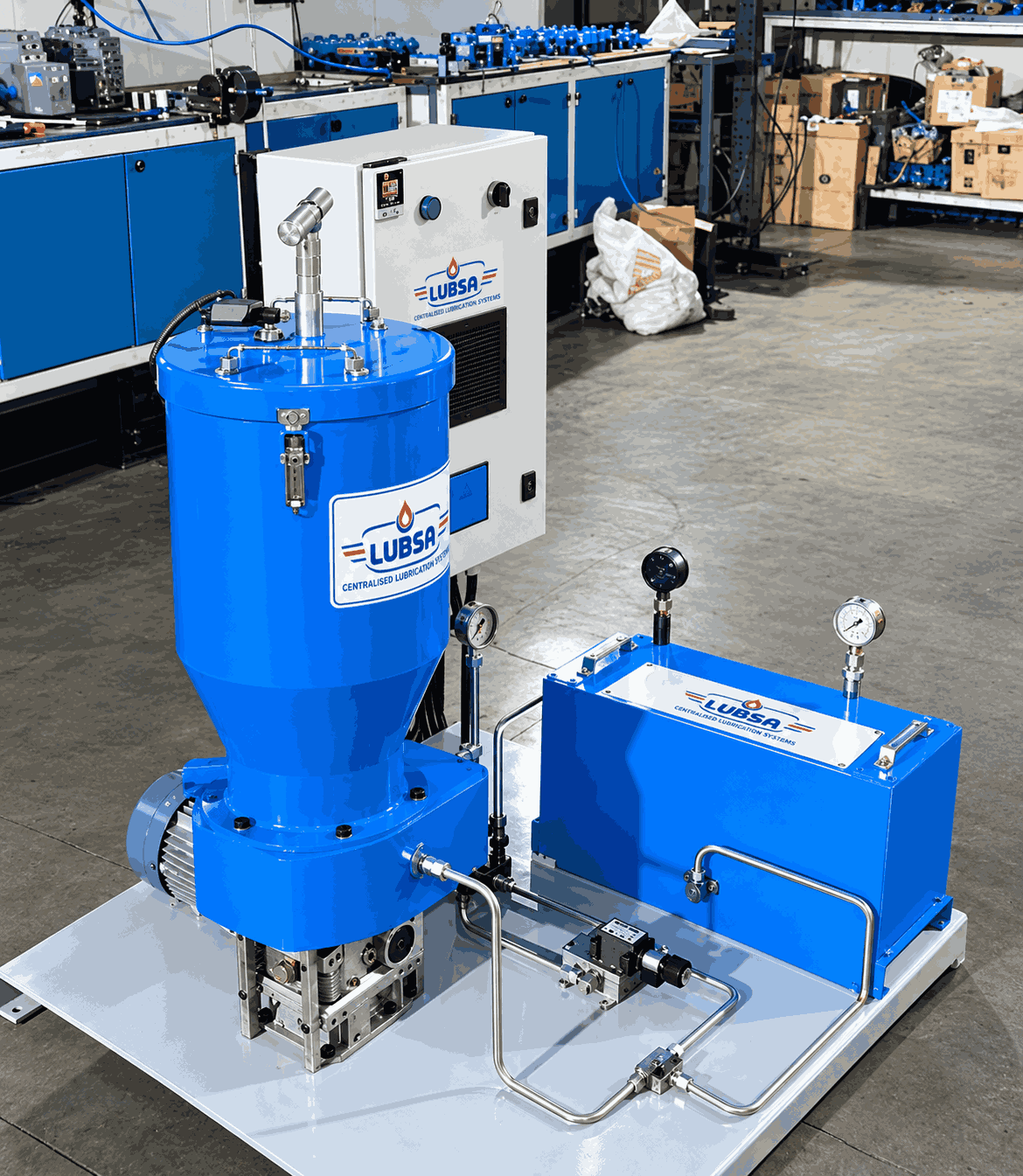
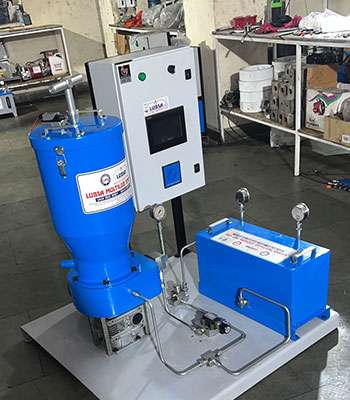
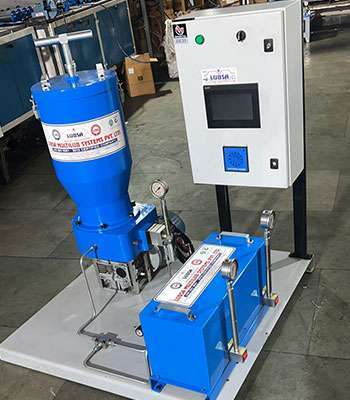
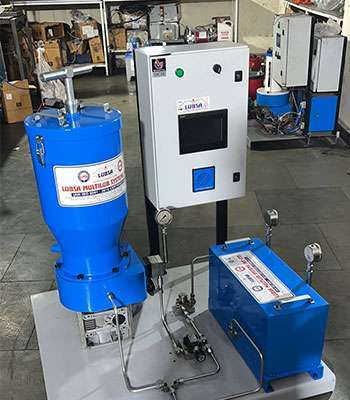
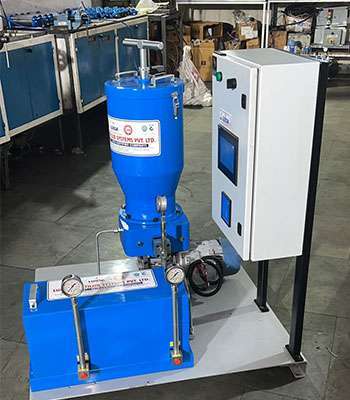
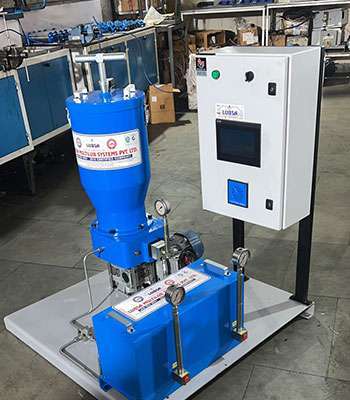
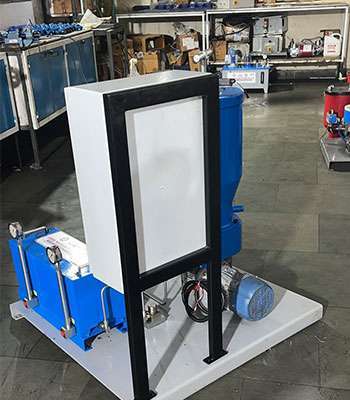
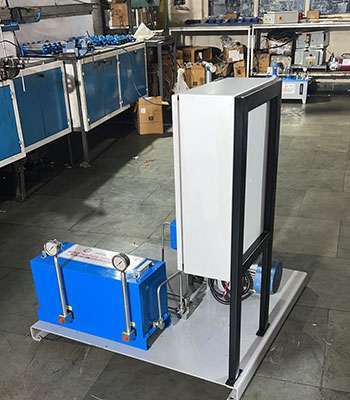
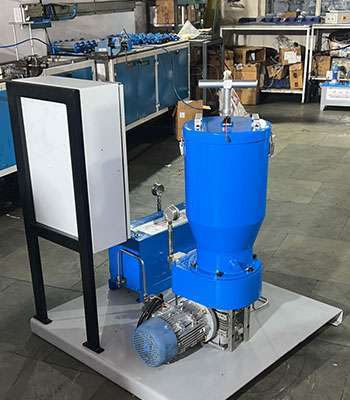
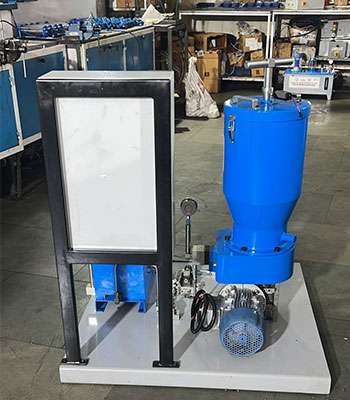
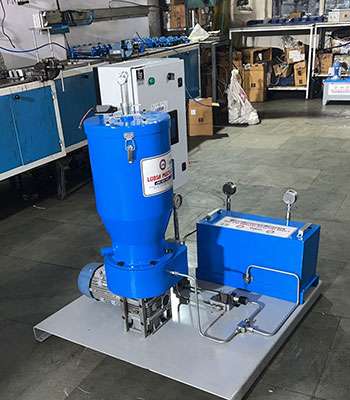
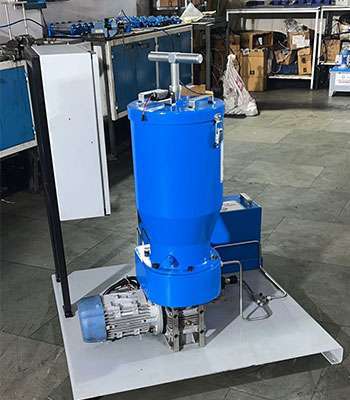
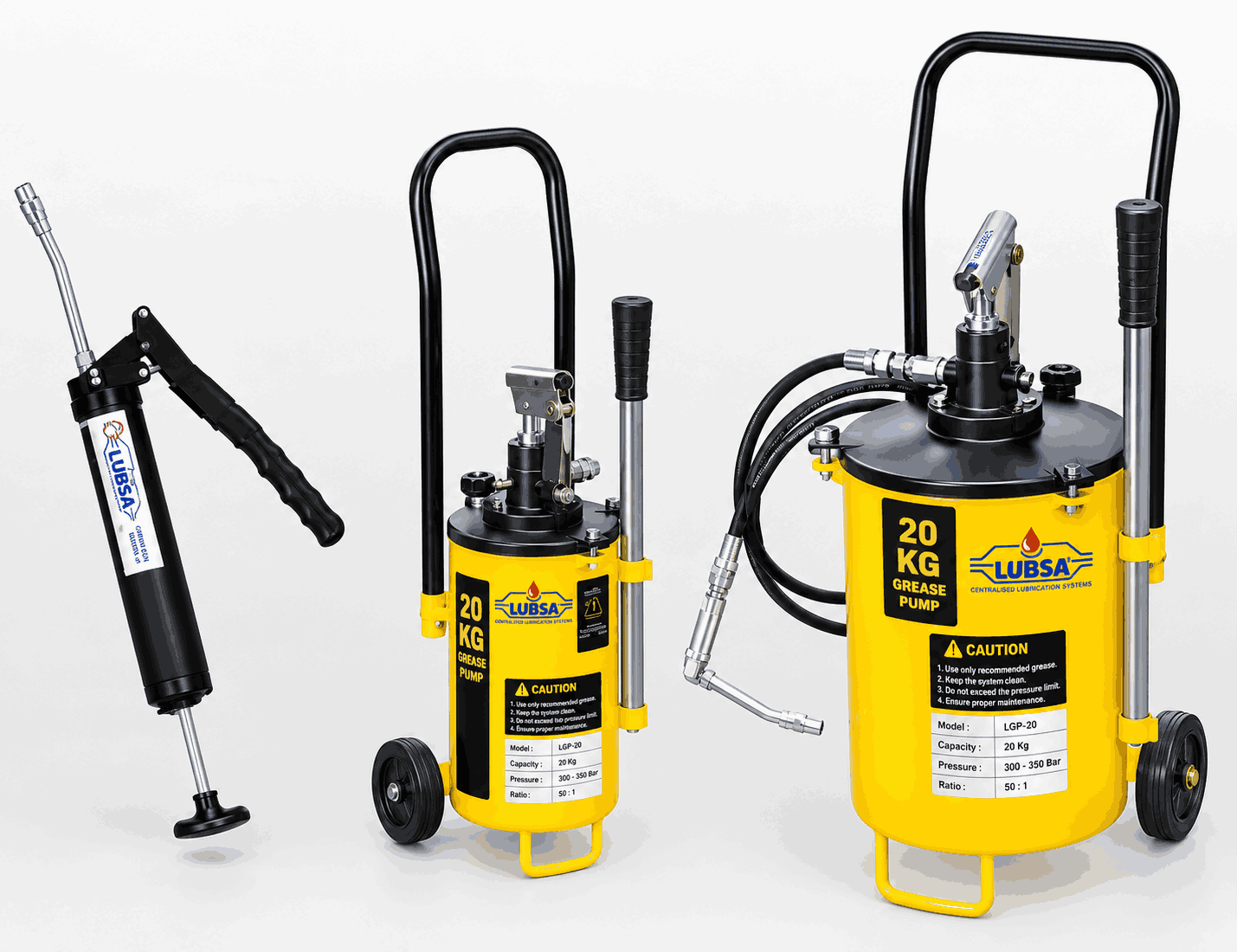
A dual line grease lubrication system is an automatic centralized lubrication solution designed to deliver controlled quantities of grease to multiple lubrication points across industrial machinery. It is particularly suitable for large machines, long lubrication lines, and demanding operating environments where manual lubrication is time-consuming, inconsistent, or difficult to perform.
Heavy-duty equipment often contains numerous bearings, shafts, gears, rollers, joints, and other moving components that require regular lubrication. When these lubrication points are spread across a large machine, manually applying grease can increase maintenance time and may expose workers to difficult or hazardous working conditions.
A dual line lubrication system solves this challenge by automatically distributing grease through two main supply lines. The system alternates pressure between the two lines, allowing grease to reach multiple lubrication points through metering devices or distributors.
LUBSA provides industrial lubrication solutions designed to support efficient machine maintenance, reliable lubrication, and improved equipment performance. A properly engineered dual line grease lubrication system can help reduce lubrication-related downtime, control grease consumption, and support longer component service life.
What Is a Dual Line Grease Lubrication System?
A dual line grease lubrication system is a centralized automatic lubrication system that uses two main grease supply lines to distribute lubricant to multiple lubrication points.
The system generally consists of:
- Grease reservoir
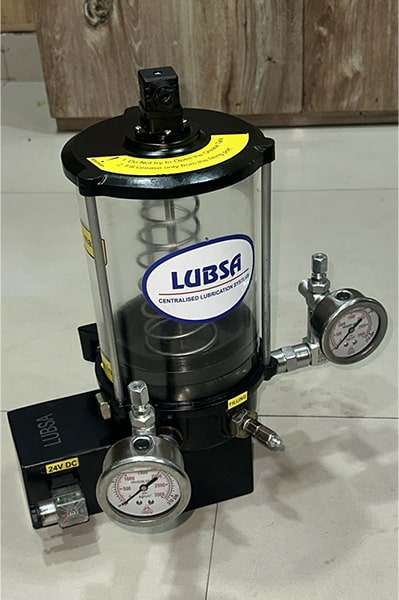
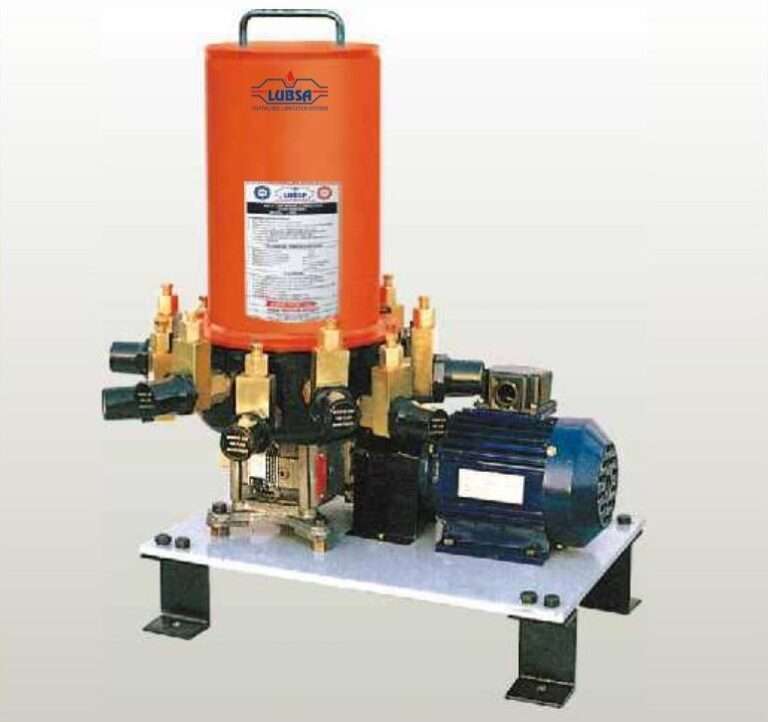
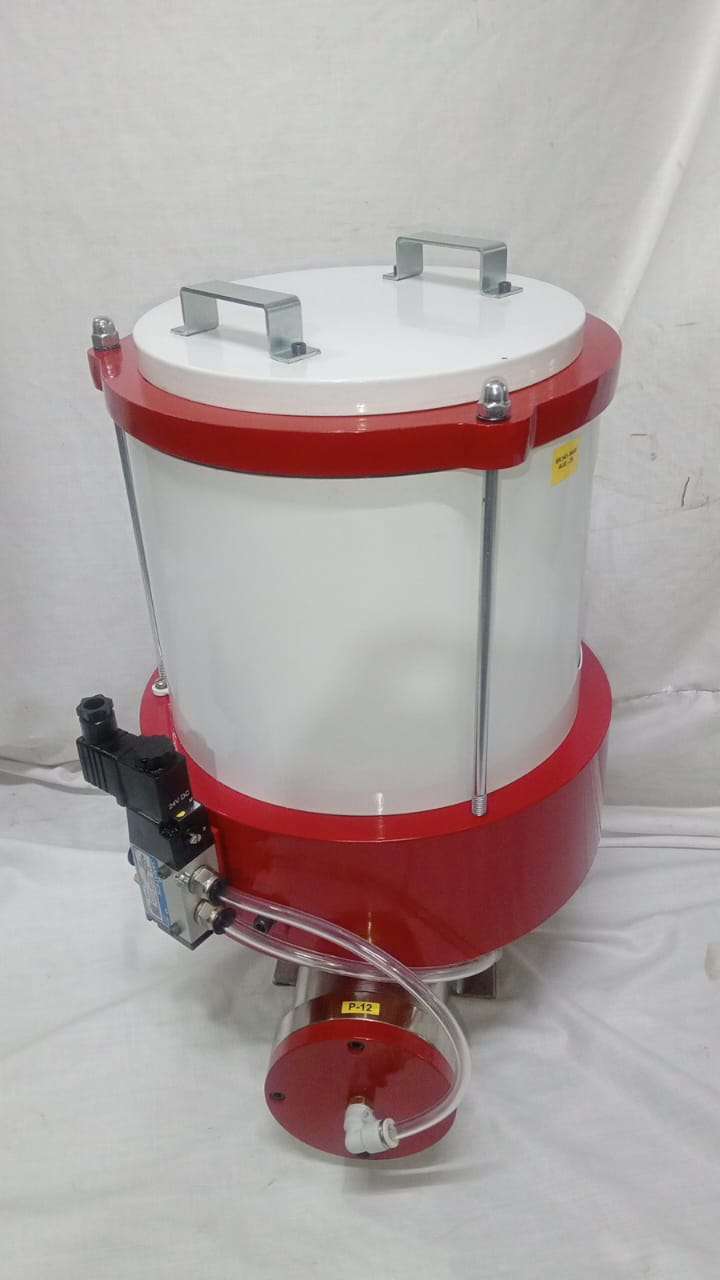
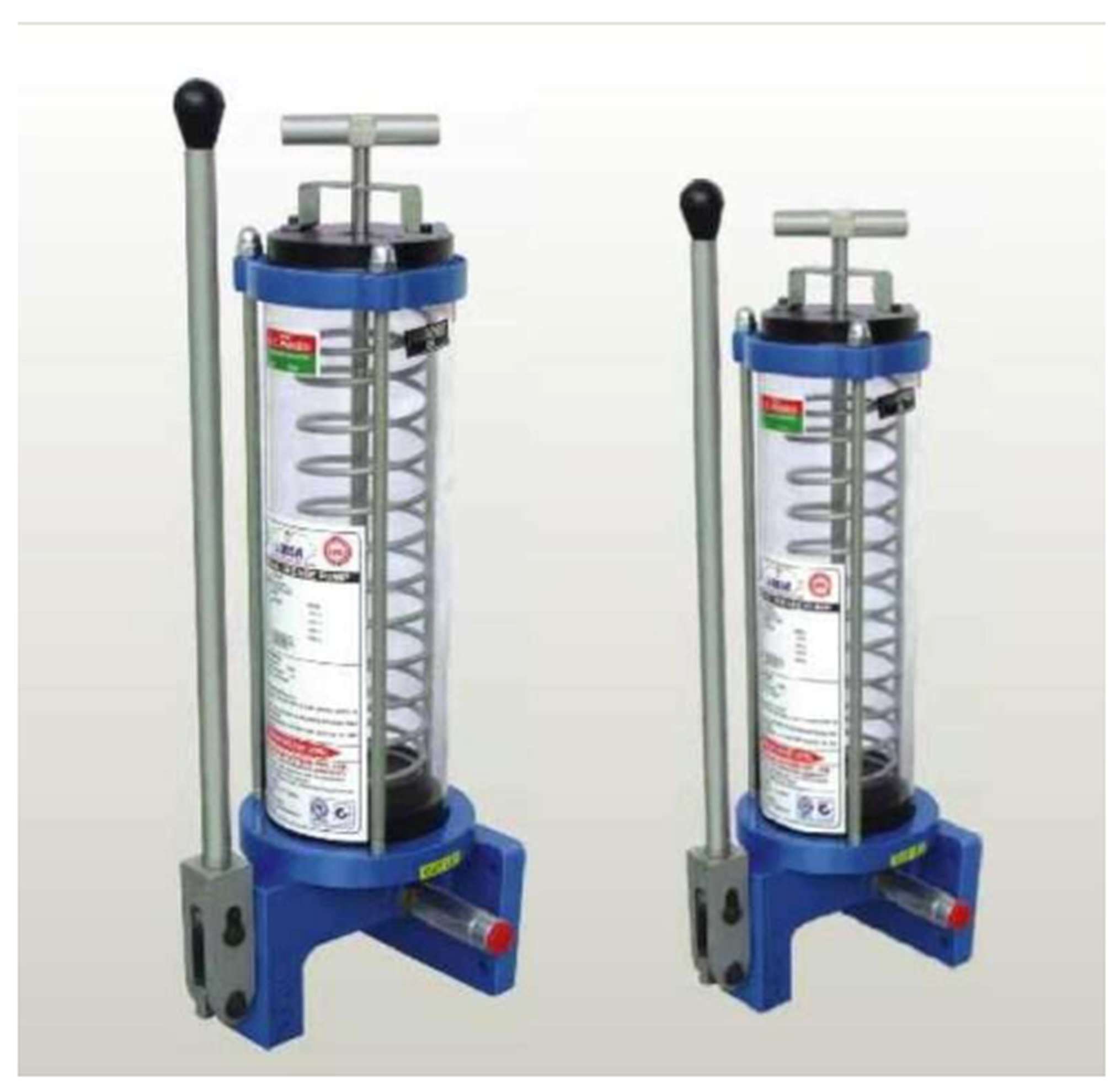
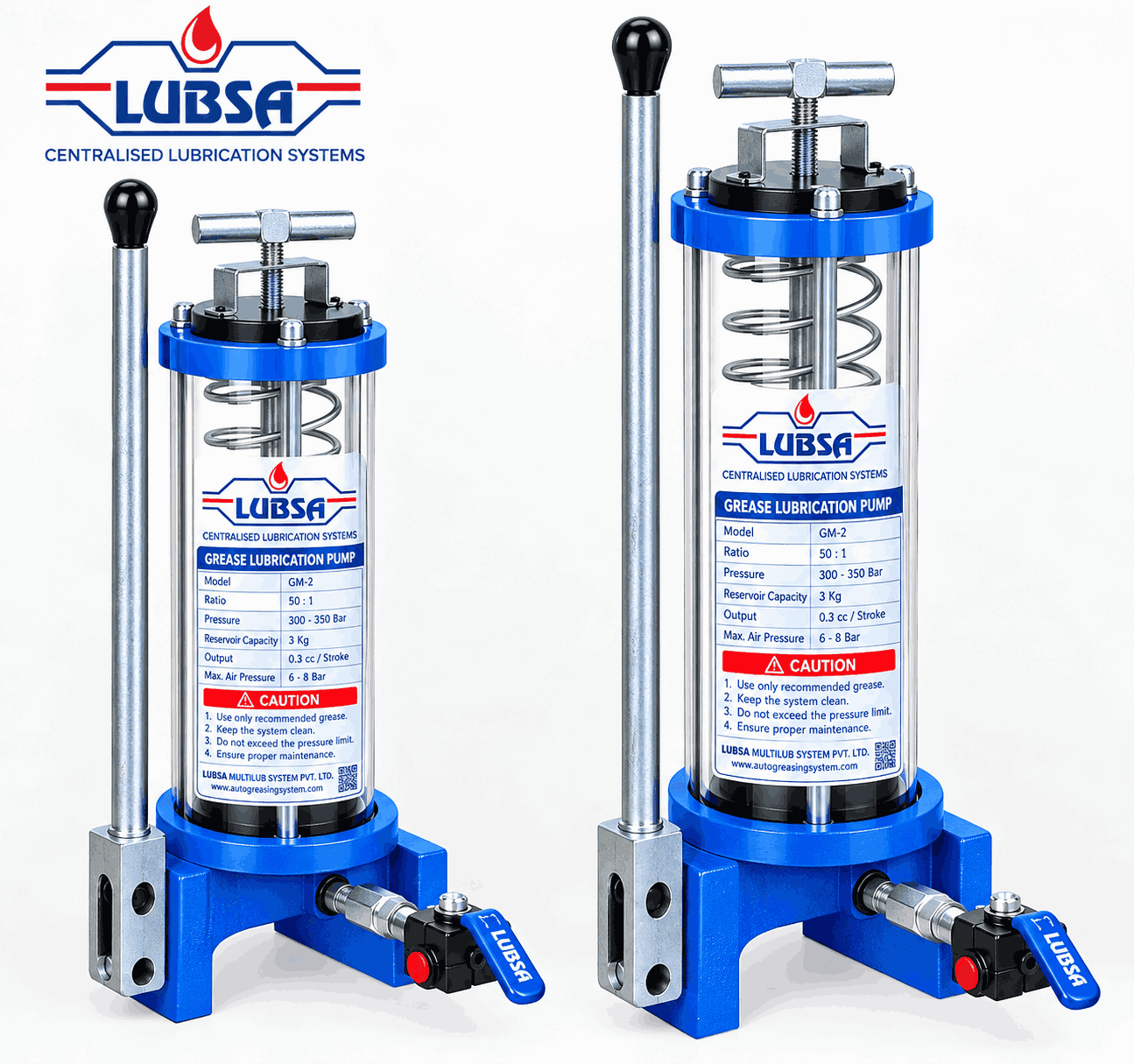
- Electric, pneumatic, or hydraulic lubrication pump
- Two main lubrication lines
- Dual line metering devices
- Directional control valve
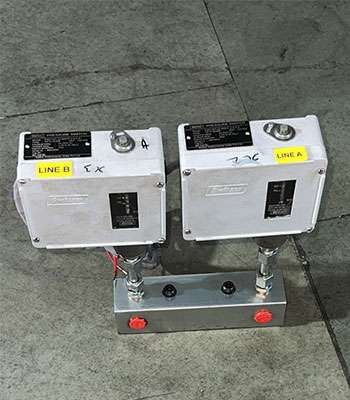
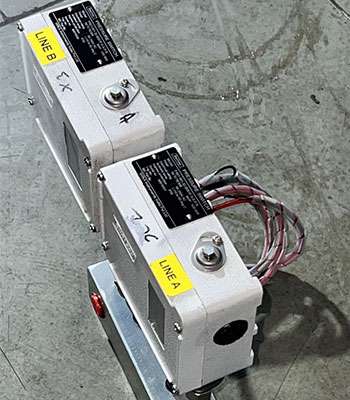
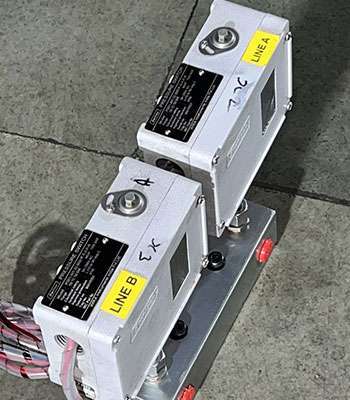
- Pressure switches or monitoring devices
- Distribution blocks
- Tubing or high-pressure piping
- Fittings and connectors
- Control panel or automatic controller
During operation, grease is pumped into one main line while the second line acts as the return or inactive line. Once the required pressure is reached, the system switches the pressure from one line to the other.
This alternating pressure arrangement enables the system to supply grease over long distances and to a large number of lubrication points.
The dual line design is particularly valuable in large industrial installations where a single-line system may not provide the required distribution capacity or flexibility.
How Does a Dual Line Grease Lubrication System Work?
The working principle of a dual line grease lubrication system is based on alternating pressure between two primary lubrication lines.
The process begins when the lubrication pump draws grease from the reservoir. The pump sends grease into the first main line. The pressure in this line activates the metering devices connected to it, allowing a predetermined quantity of grease to be delivered to the connected lubrication points.
When the required pressure is achieved, a directional control valve changes the flow path. The second main line becomes pressurized while the first line is relieved.
The metering devices connected to the second line then deliver grease to their respective lubrication points.
This cycle continues automatically according to the programmed lubrication schedule.
Basic Operating Cycle
Grease Reservoir → Lubrication Pump → Main Line 1 → Metering Devices → Lubrication Points
Then:
Grease Reservoir → Lubrication Pump → Main Line 2 → Metering Devices → Lubrication Points
The controller can initiate lubrication cycles according to time, machine operation, production cycles, or other predefined parameters.
This controlled distribution helps ensure that multiple lubrication points receive the required quantity of grease without relying on manual application.
Why Choose a Dual Line Lubrication System?
Industrial machines frequently operate under high loads, vibration, dust, moisture, elevated temperatures, and continuous production schedules. Under these conditions, inadequate lubrication can contribute to friction, overheating, wear, and premature component failure.
A dual line grease lubrication system provides a centralized method of delivering grease to numerous lubrication points.
1. Automatic Lubrication
The system automates routine lubrication activities, reducing dependence on manual greasing.
2. Multiple Lubrication Points
One centralized system can supply grease to many lubrication points throughout a machine or production line.
3. Long Distribution Distances
Dual line systems are well suited to applications where lubrication points are located far from the central pump.
4. Controlled Grease Delivery
Metering devices regulate the quantity of lubricant supplied to individual lubrication points.
5. Reduced Maintenance Effort
Automated lubrication reduces the time maintenance personnel need to spend manually greasing individual components.
6. Improved Equipment Reliability
Consistent lubrication helps maintain an appropriate lubricant film between moving surfaces and can reduce lubrication-related wear.
7. Better Grease Management
Controlled delivery can help reduce unnecessary grease consumption caused by over-lubrication.
8. Suitable for Demanding Applications
Dual line systems can be engineered for heavy-duty machinery operating in challenging industrial environments.
Key Components of a Dual Line Grease Lubrication System
Understanding the main components helps in selecting the right automatic lubrication solution.
Grease Reservoir
The reservoir stores the grease required for the lubrication cycle. Reservoir capacity can be selected according to the number of lubrication points, lubrication frequency, and machine operating conditions.
Lubrication Pump
The pump generates the pressure necessary to move grease through the distribution network. Depending on the application, electric, pneumatic, or other suitable pump configurations may be used.
Dual Main Lines
Two primary grease lines connect the pump and distribution system. The pressure alternates between these lines during the lubrication cycle.
Dual Line Distributors
These metering devices distribute measured quantities of grease to the connected lubrication points.
Directional Control Valve
The directional valve switches grease pressure between the two main lines. Proper valve operation is essential for maintaining the alternating lubrication cycle.
Pressure Switch
Pressure monitoring devices can help identify whether the required pressure has been reached during the lubrication cycle.
Controller
A controller can automate lubrication cycles based on time, machine operation, or programmed requirements.
Tubing and Fittings
High-pressure tubing, pipes, connectors, and fittings create the network through which grease travels to the lubrication points.
Applications of Dual Line Grease Lubrication Systems
A dual line grease lubrication system is commonly considered for large industrial machines where multiple lubrication points require centralized lubrication.
Steel Plants
Steel manufacturing equipment often operates under high loads, high temperatures, dust, and continuous production conditions. Automated lubrication can help maintain bearings, rollers, and other moving components.
Cement Plants
Cement manufacturing equipment includes crushers, conveyors, mills, kilns, and other heavy machinery. These machines may contain numerous lubrication points that are difficult to service manually.
Mining Equipment
Mining machinery operates under severe loads and abrasive conditions. Centralized lubrication can help deliver grease to critical components while reducing manual maintenance requirements.
Material Handling Equipment
Conveyors, stackers, reclaimers, and other material handling systems may require lubrication across multiple points distributed over long machine structures.
Construction Equipment
Heavy construction equipment contains numerous joints, bearings, pins, and moving components. Depending on machine design, centralized lubrication can simplify routine lubrication.
Paper and Pulp Industry
Paper production machinery often operates continuously and contains multiple bearings and rotating components. Automated lubrication can support reliable operation.
Sugar Industry
Sugar mills and associated machinery can operate for extended production cycles and may contain many lubrication points requiring regular grease application.
Power Plants
Fans, conveyors, crushers, and auxiliary equipment may require reliable lubrication for continuous operation.
Ports and Bulk Material Handling
Large conveyors, ship loaders, unloaders, cranes, and other material-handling equipment can benefit from centralized lubrication solutions.
Rubber and Tire Manufacturing
Industrial production machinery can contain multiple bearings and mechanical components requiring consistent lubrication.
Dual Line Grease Lubrication System for Heavy-Duty Applications
Heavy-duty machinery requires lubrication systems capable of handling challenging operating conditions.
A dual line system can be advantageous where:
- There are many lubrication points.
- Lubrication points are distributed over a large area.
- Long grease lines are required.
- Machines operate continuously.
- Manual lubrication is difficult.
- Equipment operates under high loads.
- Production downtime must be minimized.
- Consistent grease delivery is required.
The system can be engineered according to the machine layout, lubrication requirements, grease characteristics, pressure requirements, and number of lubrication points.
This makes dual line technology a flexible solution for centralized industrial lubrication.
Dual Line vs Single Line Lubrication System
Both single-line and dual-line lubrication systems can be useful depending on the application.
A single-line system generally distributes lubricant through a primary line using suitable metering components. Dual-line systems use two main lines and alternate pressure between them.
Dual Line System
A dual line system is generally preferred when:
- There are many lubrication points.
- Distribution distances are long.
- The machinery is large.
- High grease pressure may be required.
- Industrial operating conditions are demanding.
- The system needs flexibility for extensive lubrication networks.
Single Line System
A single-line system may be appropriate for smaller or less complex lubrication networks where the number of lubrication points and distribution distance are limited.
The correct choice should always be based on the actual lubrication requirements of the machinery rather than simply selecting a system based on the number of components.
Benefits of Automatic Grease Lubrication
Manual greasing is still used across many industries, but it can present several challenges.
Maintenance personnel may need to visit numerous lubrication points repeatedly. Some points may be located near moving equipment or in difficult-to-access locations.
An automatic dual line system can help address these challenges.
Reduced Manual Lubrication
The centralized system supplies grease automatically according to a predetermined schedule.
Improved Lubrication Consistency
Each lubrication point can receive a controlled amount of grease through its corresponding metering device.
Reduced Risk of Missed Lubrication Points
Centralized distribution helps ensure that connected lubrication points are included in the lubrication cycle.
Improved Maintenance Productivity
Maintenance teams can spend less time performing routine lubrication and more time on inspection and preventive maintenance.
Potentially Longer Component Life
Adequate lubrication can reduce friction and wear, supporting the operating life of bearings and other components.
Reduced Equipment Downtime
Automated lubrication can help reduce lubrication-related failures and unplanned maintenance interruptions.
How to Select the Right Dual Line Grease Lubrication System
Choosing an appropriate system requires an understanding of the machinery and its operating conditions.
Number of Lubrication Points
Determine the total number of bearings, joints, shafts, rollers, gears, and other components requiring grease.
Lubrication Frequency
Some components may require frequent lubrication while others may require less frequent grease delivery.
Grease Type
The system must be compatible with the grease being used. Grease consistency, viscosity characteristics, temperature performance, and compatibility should be considered.
Operating Temperature
High or low temperatures can influence grease performance and system operation.
Distribution Distance
The distance between the central pump and the furthest lubrication point is an important design factor.
Operating Pressure
The required system pressure depends on the grease, piping arrangement, metering components, and machine requirements.
Machine Environment
Dust, water, chemicals, vibration, temperature, and other environmental conditions should be considered during system selection.
Control Requirements
The system can be configured with manual, semi-automatic, or fully automatic controls depending on the application.
Importance of Proper Grease Selection
A lubrication system can only perform effectively when the lubricant is appropriate for the machinery.
Industrial grease is available in different grades and formulations. Factors such as base oil, thickener type, operating temperature, load, speed, water resistance, and environmental conditions can influence grease selection.
Using an unsuitable grease can negatively affect lubrication performance.
Before selecting grease for a dual line system, consider:
- Operating temperature
- Load conditions
- Machine speed
- Grease consistency
- Water resistance
- Environmental contamination
- Compatibility with existing lubricant
- Equipment manufacturer’s specifications
LUBSA can help users identify suitable lubrication system configurations based on their application requirements.
Installation of a Dual Line Grease Lubrication System
Proper installation is essential for reliable system performance.
The installation process generally includes:
- Identifying all required lubrication points.
- Preparing the machine lubrication layout.
- Selecting the pump and reservoir.
- Installing the two main grease lines.
- Installing dual-line metering devices.
- Connecting branch lines to lubrication points.
- Installing the directional control valve.
- Installing pressure monitoring devices.
- Connecting the control system.
- Filling the reservoir with compatible grease.
- Priming the system.
- Checking each lubrication point.
- Testing the complete lubrication cycle.
The distribution network should be installed carefully to avoid unnecessary bends, leakage points, contamination, or mechanical damage.
Maintenance of Dual Line Grease Lubrication Systems
Automatic lubrication does not mean maintenance-free operation.
Regular inspection helps ensure that the system remains reliable.
Maintenance teams should periodically check:
- Grease level
- Pump operation
- Pressure levels
- Main lubrication lines
- Branch lines
- Fittings
- Metering devices
- Directional valve operation
- Pressure switches
- Control panel
- Lubrication point condition
- Signs of leakage
- Blocked lines
- Damaged tubing
If a lubrication point does not receive grease, the cause may be a blocked line, incorrect metering device, insufficient pressure, unsuitable grease, or a mechanical issue at the lubrication point.
Early detection can prevent larger maintenance problems.
Common Problems in Dual Line Lubrication Systems
Although dual line systems are designed for reliable industrial operation, certain problems can affect performance.
Blocked Lubrication Lines
Contamination or hardened grease can restrict flow.
Incorrect Grease
Grease that is incompatible with the system may cause poor pumping or distribution.
Insufficient Pressure
Incorrect pressure can prevent metering devices from operating correctly.
Damaged Tubing
Physical damage to distribution lines can result in leakage or inadequate grease delivery.
Faulty Directional Valve
A malfunctioning switching valve can interrupt the alternating pressure cycle.
Empty Reservoir
Insufficient grease can cause the pump to operate without delivering the required lubricant.
Routine inspection and preventive maintenance can help minimize these problems.
Dual Line Grease Lubrication System for Preventive Maintenance
Preventive maintenance aims to identify and address potential equipment problems before they result in major failures.
Lubrication plays a central role in this strategy.
A dual line grease lubrication system can provide regular lubricant delivery based on a predefined schedule. This helps create a more systematic approach to lubrication compared with irregular manual greasing.
When combined with machine inspections, condition monitoring, vibration analysis, temperature monitoring, and maintenance records, centralized lubrication can contribute to a comprehensive equipment maintenance program.
Why LUBSA for Dual Line Grease Lubrication Systems?
LUBSA specializes in industrial lubrication solutions designed to support reliable machine operation and efficient maintenance.
Choosing a lubrication system should involve more than selecting a pump. The entire lubrication network must be considered, including:
- Machine design
- Number of lubrication points
- Grease requirements
- Distribution distance
- Operating pressure
- Environmental conditions
- Lubrication frequency
- Control requirements
- Maintenance objectives
LUBSA can help industries evaluate these requirements and select an appropriate centralized lubrication configuration.
Whether the requirement involves heavy industrial machinery, conveyors, processing equipment, steel plant machinery, mining equipment, or other demanding applications, a properly engineered dual line lubrication system can provide an efficient method of centralized grease delivery.
Frequently Asked Questions About Dual Line Grease Lubrication Systems
What is a dual line grease lubrication system?
A dual line grease lubrication system is an automatic centralized lubrication system that uses two main grease lines to distribute lubricant to multiple lubrication points. Pressure alternates between the two lines to operate the metering devices.
How does a dual line lubrication system work?
The lubrication pump sends grease into one main line. Once the required pressure is reached, the system switches pressure to the second line. This alternating process activates the distributors and delivers measured grease quantities to connected lubrication points.
Where are dual line lubrication systems used?
They are commonly used for large industrial machinery in steel plants, cement plants, mining, power generation, material handling, paper mills, sugar mills, ports, and other heavy-duty applications.
What are the advantages of a dual line grease system?
Key advantages include centralized lubrication, automatic grease delivery, support for numerous lubrication points, long distribution distances, reduced manual maintenance, controlled grease consumption, and improved lubrication consistency.
Is a dual line system suitable for heavy machinery?
Yes. Dual line systems are particularly suitable for large and heavy-duty machinery where many lubrication points are distributed over a significant area.
How many lubrication points can a dual line system support?
The capacity depends on the system design, pump capacity, metering devices, distribution layout, grease characteristics, and application requirements. A properly engineered system can support a large number of lubrication points.
What type of grease can be used?
The grease must be compatible with the pump, distribution components, metering devices, and machinery. Grease consistency, operating temperature, load, speed, and manufacturer recommendations should be considered.
Does a dual line system reduce grease consumption?
Controlled grease delivery can help minimize unnecessary over-lubrication. Actual grease consumption depends on the machine, lubrication frequency, component requirements, and system configuration.
Can the system be automated?
Yes. Dual line lubrication systems can be equipped with controllers, timers, pressure switches, sensors, and monitoring components to automate lubrication cycles and provide system-status information.
What is the difference between a dual line and single line lubrication system?
A dual line system uses two main lubrication lines and alternates pressure between them. It is often selected for larger lubrication networks, long distances, and applications with numerous lubrication points. Single-line systems may be suitable for smaller or simpler applications.
How often should a dual line lubrication system be inspected?
Inspection frequency depends on the machinery and operating conditions. Regular checks of grease level, pressure, lines, fittings, metering devices, and control components are recommended according to the system manufacturer’s maintenance guidelines.
Can LUBSA design a customized dual line lubrication system?
Yes. A suitable system can be designed around the machine layout, number of lubrication points, grease requirements, operating conditions, distribution distance, and control requirements.